Monday, January 19, 2009

sometimes love isn't love

sometimes we notice
that another person
doesn't"love us"
as much as we "love" them

oh, well

that's the way they are
or what they are capable
of just now

and anyway:
when the mind starts
"keeping track"
it's not love
anymore

it's a marketing
arrangement

reality:
it's fun to ove

reality:
other people love or don't love

that's their job

our job:

wake up to ourselves
in the moment
and see where we
can go
from there

Labels: , , , ,

Saturday, November 01, 2008

I shouldn't be such an idiot: Is that true?

sukha party

dancing people, JJ

I was an idiot the other day,
oh well.

I went to the Sukhawat party
looking for people to be unconscious,
asleep, blah, blah. Blah.

They were.
La, la.
What's new.

And I made myself unhappy
with the story that:
People should be awake.

What silliness:

People should be awake
if they are awake.

People should be asleep
if they are asleep.

Their business.

One person to keep
awake
if I can
and want to:

me


Labels: , , , , ,

Monday, July 14, 2008

Who was Moshe Feldenkrais?

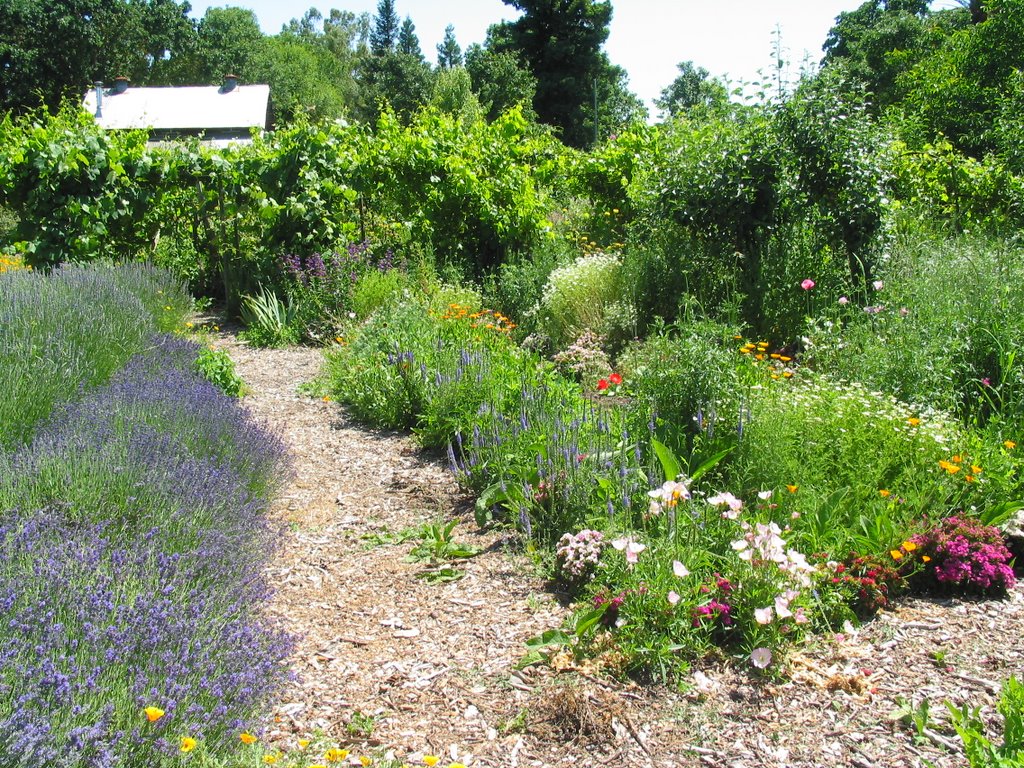
garden and gourd wall
Finally got another camera and here's some beginning
tastes of our garden.


The dude lived from 1904 to 1984, which places him among the dead.

Some think he was a genius.

Here's what I wrote about him recently:

"And who was this Moshe Feldenkrais? Well, he lived from 1904 to 1984. He was born in an area of Poland, walked off at fourteen to Palestine, re-started life there as a laborer, and a tutor, and progressed in his life to achieving a Doctorate of Science from the Sorbonne in France and inventing a system of healing and change and brain rewiring that has help thousands throughout the world.

Helped whom?

Musicians, actors, skiers, golfers, high performance folk of all sort. And children with special needs such as cerebral palsy and autism. And folks who are finding themselves annoyed or worse with painful shoulders, backs, necks, hips. People recovering from surgery. And upgrading their movement and brain and whole self enough sometimes not to need surgery.

And back to Moshe Feldenkrais.

This was a man who was a physicist, and an engineer. A man who studied the martial arts as a young man in Palestine in the 1920’s, the study and pursuit of which led to his being the first European to become a black belt in judo in Europe in the 1930’s. He loved sports, and his overzealous love of soccer led to knee injuries. Working on submarines in England during World War II, he encountered slippery surfaces which aggravated his knee injury to the point he asked about surgery.

When the doctor of the time told him they could try, but his chances of walking after would be 50%, Moshe said he could flip a coin for those odds, and proceeded to invent a whole new way of “body work,” that turns out to be brain work.

He drew on judo, and its awareness of efficient action centered in the power of the pelvis and the freedom of the head to look always easily in all directions. He drew on anatomy and physiology. He drew on his pediatrician wife’s access to children to study closely how human nervous systems learn to move from scratch, and how, interestingly enough, the moves of infants and toddlers, are often those “discovered” to be most efficient and useful in judo.

And this is core to remember: babies have to learn it all. Luckily adults can't really teach them to crawl and walk, and there is no crawling and rolling over and lifting the head and walking program. It's all learned.

He drew on the concepts of engineering: how is our body engineered as an organism that can do all the things it can do. (Hint: two legs maximizes instability, which maximizes mobility.). He somewhat discovered cybernetics, not in terms of computers, but in terms of getting very clear how our brains give us feedback which modifies our movement which gives the brain more feedback and so on, as we learn and refine.


He also studied a mystical and practical philosopher named George Gurdjieff, who defined the plague of humanity as being our being “asleep,” asleep to the present moment, asleep to what we are really doing, asleep to our lies about ourselves and our motivations, asleep in living a life almost entirely of habit.

Moshe could see that some habits were useful and time saving learning: how to tie shoes.

He also got very clear that some habits were learning that serves to keep us blocked and limited and often in pain, say the habit of clenching and holding our breath and curling forward when confronted with something “strange,” or something we “can’t do.”

(Can’t do, YET, is one of the big mottos in the Feldenkrais work.)

And most of all, Moshe Feldenkrais studied himself, trying this, trying that, deeply and thoroughly, learning again what toes were and ankles and knees and hips and pelvis and ribs and spine and head and eyes and tongue and mouth and shoulders and breathing and skin and rolling and sitting and walking and falling and balancing and hopping.

You know, like everything.

All over again, a fresh babe, unable to walk, wanting to function superbly again.

And he succeeded. His knees remained shot, no surgeon ever "helped" him, and he could lead groups of hundreds of people for hours on end, and do judo again, in his seventies.

This took many years, but curiosity and discovery kept leading to more curiosity and more discovery.

And if the books said it was this way, and he discovered a way they said was impossible or wrong, he went with the truth of what worked and connected for him.
So, he ended up with a system that pretends to be “body work” and is really “brain work.”

Don’t believe me. Go back to the pelvic clock or the twisting activities and do them slowly enough, and notice how shifts and learning is taking place not only in your body, but your brain.

Sometimes Moshe Feldenkrais called his work, “learning how to learn.”

Sometimes he liked to see it as a transformational tool for life as a whole, where in small and big movements, and then is larger areas of our life we could do this, another motto: Making the impossible to be possible, making the possible to be easy and then making the easy to be elegant.

So that’s a start.


If you made it all the way here
and can stand more,
this is what I wrote a couple of years
ago (August 29, 2006):
Who was Moshe Feldenkrais?


Labels: , , , ,

Thursday, June 12, 2008

come on up

our phone message
says,
via my voice
and some radio shack machine:

"Messages for Marlie Wesner
and Chris Elms
....
Come on up
if you'd like to work the soil
or
wake up to now."

since people are
often afraid to work
and even more reluctant to work
in someone else's garden

few come up

and waking up?
is that a big draw?

not really

waking up
to now
is
hey,
something
to do later,
maybe on vacation in Mexico,
or this weekend
or
yeah, yeah, this is cool:
at the next Thing
at Spirit Rock,

and so the message's
tail
progaganda/
invitation/
weeding out
device

isn't listened to

it's just
whizzed by

and some message
is left
or
not

so be it

and
and
and...

and waking up
to now
and the soil

are always
here

always
waiting

in no hurry

(and
sometimes
i am
in a hurry
about this
for me
and
worst of all
for others)

oh, well
i'm a fool
sometimes

la
la

what else
is
new???


Labels: , , , , , , ,

Saturday, March 08, 2008

Rumi and the soul


Yesterday at the yoga/ health and "whatnot" blog
I was musing about soil and soul,
and mentioned the possibility of
further musings
and
ideas
on the
"soul" part of that pair.

(Nice pair,
eh,
soil
and soul.
Deep,
rich,
sweet,
fertile,
and so on.)

So, let's start with some soul
possibilities and immediate associations:

One:
it sounds like a big deal, doesn't it?

Two,
it sounds like a fertile field for all sorts
of random and metaphysical nonsense,

of the sort:
"My soul yearns for connection
to the truth,"

"i am lost without my soul
mate"

"the soul yearns for the Infinite."

all these statements
could be true,
and could be the sort of pseudo truth
that can drive anyone crazy

Three:
it could be a way of paying
attention to something more
important than we usually pay attention to,
as
in
"What profit a person
to gain the world
and lose
their soul,"

though these days,
most people will
take the world
or even a big chunk of it
(even a little chunk)
in a minute
over something vague
and possibly wonderful
like the soul

Four:
it's a nice concept
to consider
as a concept

Five:
it's a nice concept
to imagine
experiencing
without any concept

Six:
????

and let's let a little Rumi
speak to this yearning
which may be from our "soul,"
or our deepest self
or
our self
or ??????

Here's Rumi:

"a craftsman pulled a reed from the reedbed,
and cut holes in it,
and called it a human being

Since then, it has been wailing
a tender agony of parting,
never mentioning the skill
that gave it life as a flute."

from a Coleman Barks translation,
of course

So Rumi
takes us
to a place of vague remembrance,
or forgetting
of some greater
origin

and maybe that remembrance
is through the/ our soul
and maybe what we (almost)
remember
is our soul

and maybe our little soul
remembers the Big Soul
that crafted it

and maybe....


and
and
in the quiet moments
we do sense a connection
to something vast
and amazing

something vast
and small
and everything
and
nothing

(covering all the bases here)
and
maybe that has something to do
with what we try to do
with the word
(it's just a word,
a concept)
soul

the soul
as that within us
that recognizes
this simplicity
and this immensity

and others
might say
the soul
is this immensity

actually, just occurs to me
if you want to have a sweet experience
and get bambozzled by a lot of Deep Soul
truth/ nonsense
read the Alchemist,
by Paulo Cueho,
either great wise one,
or con man,
or a bit of both

and,
i have to admit
the book is sweet
sweet
seductive
and ......

you find out

if you want


tomorrow,
at http://wakeup-feldenkrais.blogspot.com/
we'll talk about body
and soul

or brain
and soul

who knows
tomorrow
is another day


Labels: , , , , , , ,

Tuesday, March 04, 2008

the glory and sweetness of life

marlie in room
windows of life, on life,
in life


Life is long and hard.
Life is short and simple.
Life is long and simple.
Life is long and hard.

All of these could be true, all could be false.

What is this moment?

Here’s a clue, to me and you: it is neither hard, nor soft.
It= life.
And, as living being we are either,
breathing in or
breathing out,
or pausing,
or (and this happens a bit more than
we might wish) tensing between breaths.

Life is knowing this,
or not knowing this.

Life is knowing
or not knowing
about our arms and legs, and spine,
the ribs,
our pelvis,
our ribs,
the pelvis,
the sound of whatever is
sounding
right now.

for me
click click of keyboard,
for you,
??????

what is your music now?
what does your heart wish for?

can we have a wish
and make is sweet
not pretending that it is already here
not desparing that it is not yet here
just sweet
to be now
and sweet to be in a possibility
of some sweeter unfolding
in life

and sometimes that unfolding
comes most
when we wish so little
that it doesn't even seem like
a wish
except it is,
the wish to be connected
one
with
ourselves
with
now
with
life

with
Life


la, la

And this is sweet.

Seems so simple, so maybe life is simple, and yet
we make it so complicated, we have so many requirements before we’ll let ourselves come to the simple nowness of each moment:
• we have a lot of stuff to do
• we have clocks that are telling us to hurry
• we have minds that are telling us to hurry because the clocks says whatever it says
• we have other people’s expectations we are worried about
• we have our own expectations that we are worried about
• we have obligations, some quiet worthy and noble, some added on for reasons that we all know aren’t so entirely noble
• we have our habits, our routines, our ruts
• and so on


And so what?

In any moment, we can be here with our breathing, with our connection to gravity, with our awareness of light and sound.

We can feel at ease inside, our minds and our bodies.
And if not as at ease as we wish, we can
learn
just what
or sort of what
is stopping us.

And in our looking
in the moment,
we
will always find
a sweetness we may or
may not
have been expecting.

This is amazing.
Maybe I’ll remember this today. Maybe you will too.
Good sweet luck to us all.

Labels: , , , , ,

Tuesday, February 19, 2008

back to backs

i'm going to go back
to backs
and brains
at wakeup-feldenkrais.blogspot.com
and
you know
if you've read
there
much more

going back to every third day there
every third day here
and every third day at
taichiyoghealthweightloss.blogspot.com
which
will
be
about
health
as a mind
and sou
and body
and emotion
thing

which
actually
is what wakeup-feldenkrais is about

and this one
too
sort of

mainly
here
about
the glorious
thrill of
committing
a life
to waking up
healing the earth
and loving
what is

anyway....

so
see you at the rotating
blogs

or
not


love
is
a four
letter
word

so is
work


and
land

fun
is not

and play
is


Labels: , ,

Tuesday, December 25, 2007

christmas awake, christmas asleep, fun game

marlie pretty
Beautiful Marlie and her father "Pa"/Lou


we can
i can
be awake
around other
people

or asleep

it makes a
big
difference


Labels: , , , , , , ,

Tuesday, November 06, 2007

Awake n Ready

this was the theme song
at
ananda:
awake and ready

today
i lost money
in the stock
market
by selling stuff
yesterday
that went up today

and i let it bum
me out

la la
this isn't very enlightened
is it?


Labels: , , , , ,