Saturday, February 19, 2011

try 3, something must be being learned, is that true?

I don't know
and
here we go:

in the airport
on the way:
where to: Austin, Texas
why?
more special needs kids
musicians
warmer winters
son suggested it, his buddy is a supposed "in" to lots of people
met someone at a conference in Chicago in July: they made it sound amazing,
hippy church, open people from all over

why special needs kids
where from:
small island in the pacific northwest, orcas island
amazing place
and only 4000 people there in the winter
and
supposed to be a cold winter
and
dark, even if not cold
and only a few special needs kids
one of whose parent is how I met Orcas Island,
he's another
Anat Baniel Method practictioner

okay:
two journeys so far:
Orcas to Austing
What is Anat Baniel method practioner
and what does that have to do with this:

the table,
in front of me, on the stage, unopened

couple behind in line:
are you some sort of body worker

me: well it looks to outsiders like body work,
but it's brain learning, repatterning, helping the person
learn and move and think and especially, be present to themselves in new ways

c:
huh

m: well, i didn't really say that>
brain work that looks like body work

c:
we're both accupuncturists, we have a real fondness for seeing the
tables where the work takes place, what do you call your work

m: the anat baniel method is my deepest training
originally trained as and am practitioner in the Feldenkrais Method

c: oh, yes. we know it well.
where are you going?

m
where am I going
Austin

which is here,
and I know two people, well three, though two fairly well,
and both haven't time patience curtousy whatever to contact me
back
when i tell them i'm thinking of moving here

so why move?

wanted a change
wanted bigger client base

wanted to see what a place would be like
that I didn't already have set up

because i'm always on the move?

not really,
but in February of 2009 I left behind 12 years in
one of the world's supposed paradises
and took off for a month at a time in
various pre set up places,
all with a friend, or almost friend waiting with a place
to stay for a month

And before Sonoma,
where I was established enough to have designed
and created a 3 acre garden
and run for city council
there was
22 years in Berkeley,
where I raised to kids to high school, and beyond
and transitioned out of sitting on the butt work of
doing therapy
to moving around and making thing work
of design build and landscaping

And that's another journey
the spiritual journey of sit on the butt
and do goody goody meditation
and the reading of sufi stories
to the Gurdjieff work where the mediation
is to sit in the morning
and do
,,,,,
and then get up and do
,,,,,
all day

sense both arms,
both legs,
notice sound come in my ears
light coming in my eyes

something i could much more easily do
building decks and additions
and putting in gardens
that sitting in a room
talking to people

and the journey away from therapy
and back, later,
to being able to help people with any of that
via the work of Byron Katie

so:
at the airport:
on the way to Austin

Oakland airport, October 16
and the previous Octover 16 I'd come to Orcas Island,
leaving it several times for training in
the Anat Baniel method

that journey: getting more skilled

what is it?

move ourselves,
alone,
in groups,
hand guided

someone want to lie on the table?
anyone in the audience want a little journey
of guided movement,
and your brain will be a little better tuned
and you'll feel more flexible and younger and
more present
probably

all bets are off for humans,
exactly,
but each lesson
is a journey of discovery:

so journey:
Of you in your seats
Of someone here on the table
of me spiritually going out to do gardens and build gazebos,
fun for the Stanford book learning man
and the spiritual work is fine
but if the back hurts
the back hurts and in Berkeley
where I'm raising kids and making money
and being awake to arms and legs and breathing and light
and sound
or not

and what if we
now shift to arms and legs
and light and sound
and begin to turn your heads

no first

no first

and does coming back to now shift your
self
and is that shift a journey
and is to create an opening for that inner shift
why we take these outer journeys

and the back hurts in the work
and Berkeley is full of Feldenkrais classes
and I lie down on the floor and make simple
movements
and feel healed
whole
wonderful
better

so that is a start of my F/ ABM journey

and then Berkeley becomes the garden journey,
Berkeley Botanical Garden,
and landscaping
and
finally a Permaculture training
and I have to move to The Land
to begin to grow food,
become a farmer

looking many places,
22 years in Berkeley
what is the "right" spot
Santa Cruz

and so on


22 done,

I like this

Good.

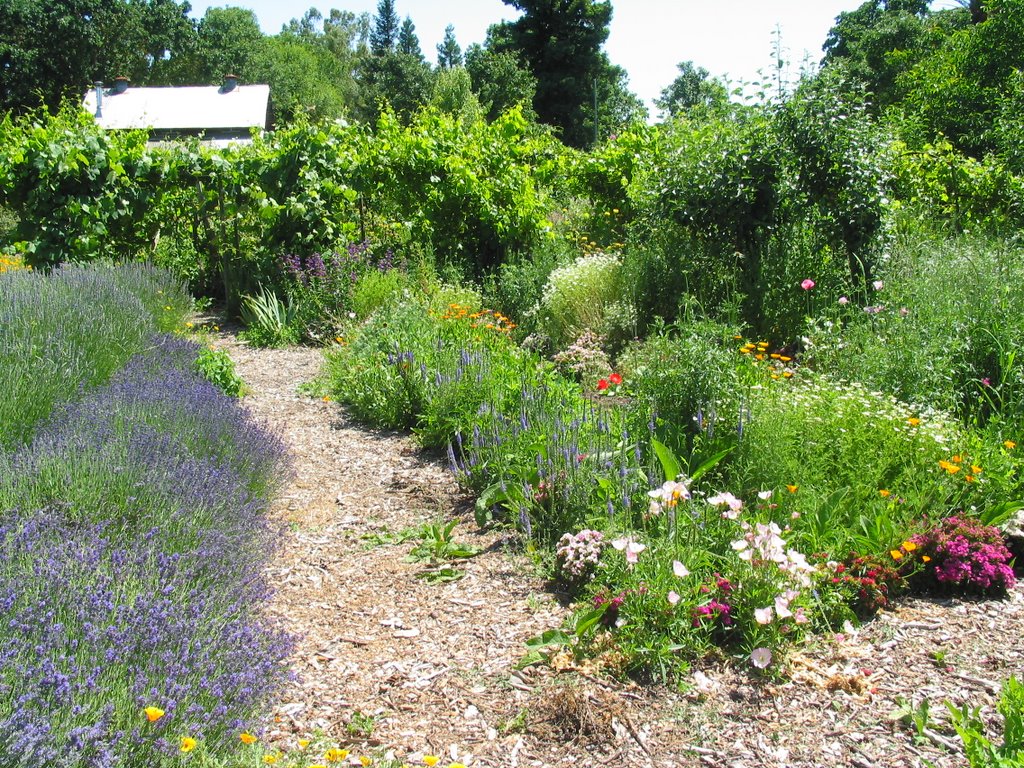
let's throw in some Sonoma pictures

Labels: , , , , , , , , , ,

Saturday, November 15, 2008

Feeding the Earth, nourishing our Soul/ Soil

making soil

a lot of people
sweet wonderful people to be
sure
think gardening
is about planting plants
and watering and growing them

that's a lot,
lot
lot
better than not growing
anything

and is on the way
to what gardening is
really about:

feeding the Earth
so the rich wonderful
soil
can feed the plants

Marlie
and I plugged away today
and converted some old falling apart plants
and bare ground
to a living mound of composting
soil
in
which just about anything will
grow fabulously

and
if you are in mild climate areas:
now's great time for
getting beds ready for winter vegies
and
in other areas,
getting soil ready for spring veggies

how to get soil ready:
like nature does,
drop leaves and grass and anything
organic on top,
stir around,
let the micro orgamisms be your rototillers

enjoy
the
work
the motion of your body
the breathing of the air
the creation of a new soil place

it's all pointed in the
fine direction:
slow down
feed ourselves
stay out of cars
feed the Earth
come back to the slow sweetness

of
Now


Labels: , , , , , ,

Friday, November 07, 2008

Feed the Earth/ How to be Unhappy

paper in garden

paper close
Feed the Earth:

here's some garden I'm preparing for the spring
tearing up junk mail, old newspapers, old jottings
putting on the hill
already made of weeds and plant debris
to be covered with dying tomatoes
weeds and
then
compost

feed the Earth
and the worms
and micro organisms will
do your rototilling for you


how to be unhappy:

want
wish
demand
wait for
count on
think you need
feel bad until you get

another person to
be different
than they are


ah,
what
hell to go with that insanity

and I did
that yesterday

what a pity

hours wasted
in
unnecessary
suffering

la,
la

hope I learned
my slow learner
dumb me
lesson

!!!!


Labels: , , , , ,

Sunday, October 03, 2004

Gardening: nature and mulch

IMITATING NATURE

Nature knows, nature grows, nature does it the easiest and most elegant way, and say, how can we imitate nature in our gardens.

BUILD SOIL FROM THE TOP DOWN. Nature doesn’t dig up soil, except for wild pigs. It throws down leaves and twigs and dead animals all to decay from the top down to make soil. In the garden, create your beds by laying down newspaper as a leaf substitute, put a little manure and kitchen waste under the paper, a little straw o compost over it and let it decay into soil in nature’s way.

NATURE COVERS THE EARTH IN WALL TO WALL ORGANIC MATTER. The only place that there are spaces between plants is in a desert. Look at most commercial farms, or those gardens with a lot of bare dirt between the plants and you see something looking more like a parking lot than nature.

In permaculture we call all this dirt showing between plants: brown desert. What to do about this? Grow more weeds for one. Many, as in purslane, mallow, dock, wild radish, wild chicory, and pigweed, are far more nutritious than anything grown commercially, by a factor of almost 10. Weeds also give the gophers and other critters something to eat beside your plants. Also, grow smaller plants between your bigger ones. And mulch, mulch, mulch, it’s not living and oxygen making like a weed, but at least it’s organic, and makes soil instead of little pockets of desert.

MULCH, MULCH—THERE CAN NEVER BE TOO MUCH MULCH


Above I commented of how Nature, in all climates except the desert, carpeted the Earth with 100% organic matter. A prairie is all plant, a forest has trees and plants and deep mulch, neither leaving any gaps unfilled with organic materials. In a garden, one way to fill the gaps between the designated plants, is with other plants, prairie fashion, either a weed or another designated plant. For example, winter squash or pumpkins were traditionally grown under corn to suppress the weeds and keep the hot sun off the ground. (Along with these two, beans growing up the corn made up the traditional Three Sisters of the Native American garden). Or you could grow lettuce or strawberries under sunflowers or apples tress over blueberries over lettuce. And so on.

You could also imitate the forest, spreading a thick carpet of organic mulch between your designated plants. You know about our cardboard and woodchip pathways. You know about newspaper and straw or compost between plants. In permaculture, comfrey is grown specifically as a mulch plant, taking advantage of its endless growth as a supply of leaves to pack down against the soil. Neighbors foolish enough not to leave the grass on their lawns when they are mowed, are another source of mulch, if the grass isn’t full of chemicals. Straw bales, or even more nutritious, hay, are a quick and easy way to pack in moisture saving, soil cooling and soil building organic material between your plants.

Think of yourself as a microorganism, busy converting organic matter to soil if the conditions are right. Would you want to hang around near the surface on a hot Sonoma summer day? Then again, under four to eight inches of straw or leaves or newspaper or plucked and piled up weeds, how would you feel now about sticking around and making some soil for the garden?

Labels: , , ,